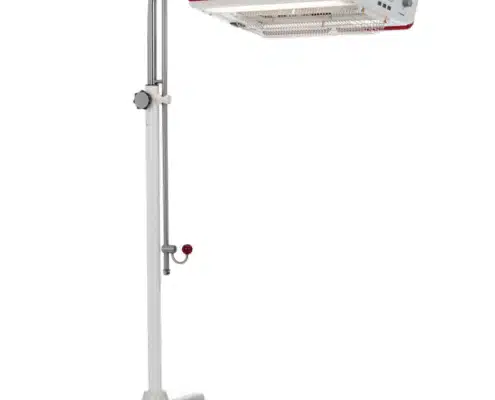
Patients with major burn injuries are prone to hypothermia, potentially resulting in an increase in mortality and length of hospital stay. Burn patients exhibit profound hypermetabolism and lose the ability to thermoregulate, rendering them susceptible to hypothermia.
https://www.centralmedical.co.uk/wp-content/uploads/2026/11/Industry-Insights-Critical-Care-KOL-News-Update-Rationalising-Warming-Devices-To-Help-Achieve-Net-Zero-Featured-Image.jpg500500CreativeInfluencehttps://www.centralmedical.co.uk/wp-content/uploads/2021/06/Logo.pngCreativeInfluence2026-08-10 09:00:202026-11-10 17:08:18Critical Care KOL News Update: Rationalising Warming Devices To Help Achieve Net-Zero
Patients with major burn injuries are prone to hypothermia, potentially resulting in an increase in mortality and length of hospital stay. Burn patients exhibit profound hypermetabolism and lose the ability to thermoregulate, rendering them susceptible to hypothermia.
https://www.centralmedical.co.uk/wp-content/uploads/2026/07/Industry-Insights-Neonatal-KOL-News-Update-The-Benefits-Of-Reusable-Versus-Disposable-Bottles-and-Teats-Featured-Image.jpg500500CreativeInfluencehttps://www.centralmedical.co.uk/wp-content/uploads/2021/06/Logo.pngCreativeInfluence2026-07-06 09:00:442026-11-10 17:17:25Neonatal KOL News Update: The Benefits Of Reusable Versus Disposable Bottles and Teats
Patients with major burn injuries are prone to hypothermia, potentially resulting in an increase in mortality and length of hospital stay. Burn patients exhibit profound hypermetabolism and lose the ability to thermoregulate, rendering them susceptible to hypothermia.
https://www.centralmedical.co.uk/wp-content/uploads/2026/11/Industry-Insights-Neonatal-KOL-News-Update-The-Importance-Of-Kangaroo-Care-Therapy-Featured-Image.jpg500500CreativeInfluencehttps://www.centralmedical.co.uk/wp-content/uploads/2021/06/Logo.pngCreativeInfluence2026-05-11 09:00:462026-11-10 17:10:38Neonatal KOL News Update: The Importance Of Kangaroo Care Therapy
Patients with major burn injuries are prone to hypothermia, potentially resulting in an increase in mortality and length of hospital stay. Burn patients exhibit profound hypermetabolism and lose the ability to thermoregulate, rendering them susceptible to hypothermia.
https://www.centralmedical.co.uk/wp-content/uploads/2026/11/Industry-Insights-Critical-Care-KOL-News-Update-Warming-Protocols-As-Predictors-Of-Postoperative-Hypothermia-In-Ovarian-Cancer-Surgery-Featured-Image.jpg500500CreativeInfluencehttps://www.centralmedical.co.uk/wp-content/uploads/2021/06/Logo.pngCreativeInfluence2026-03-02 09:00:532026-11-10 17:07:04Critical Care KOL News Update: Warming Protocols As Predictors Of Postoperative Hypothermia In Ovarian Cancer Surgery
Patients with major burn injuries are prone to hypothermia, potentially resulting in an increase in mortality and length of hospital stay. Burn patients exhibit profound hypermetabolism and lose the ability to thermoregulate, rendering them susceptible to hypothermia.
https://www.centralmedical.co.uk/wp-content/uploads/2026/11/Industry-Insights-Neonatal-KOL-News-Update-Novel-Treatment-Strategies-To-Improve-Neonatal-Brain-Injuries-Featured-Image.jpg500500CreativeInfluencehttps://www.centralmedical.co.uk/wp-content/uploads/2021/06/Logo.pngCreativeInfluence2026-02-23 09:00:372026-11-10 17:09:31Neonatal KOL News Update: Novel Treatment Strategies To Improve Neonatal Brain Injuries
Patients with major burn injuries are prone to hypothermia, potentially resulting in an increase in mortality and length of hospital stay. Burn patients exhibit profound hypermetabolism and lose the ability to thermoregulate, rendering them susceptible to hypothermia.
https://www.centralmedical.co.uk/wp-content/uploads/2025/12/Weyer_Ceramotherm_3100_Main_2_27428fc9d1-1.png.jpg842595CreativeInfluencehttps://www.centralmedical.co.uk/wp-content/uploads/2021/06/Logo.pngCreativeInfluence2025-12-10 14:59:302025-12-10 15:00:12The Importance Of Effective Temperature Management In Burns Patients To Avoid Hypothermia
Hypothermia in surgical patients can be the result of a long surgery duration, general anaesthesia and a low temperature in theatre. Hypothermia is a problem that should be prevented in surgical patients, due to the serious issues that it can cause.
https://www.centralmedical.co.uk/wp-content/uploads/2025/11/News-Events-Delayed-Cord-Clamping-For-Improved-Health-Outcomes-Featured-Image.jpg500500CreativeInfluencehttps://www.centralmedical.co.uk/wp-content/uploads/2021/06/Logo.pngCreativeInfluence2025-11-26 13:54:012025-11-26 13:54:01Delayed Cord Clamping For Improved Health Outcomes
Hypothermia in surgical patients can be the result of a long surgery duration, general anaesthesia and a low temperature in theatre. Hypothermia is a problem that should be prevented in surgical patients, due to the serious issues that it can cause.
https://www.centralmedical.co.uk/wp-content/uploads/2025/11/News-Events-The-Importance-Of-Managing-Patients-IV-Fluids-Featured-Image.jpg500500CreativeInfluencehttps://www.centralmedical.co.uk/wp-content/uploads/2021/06/Logo.pngCreativeInfluence2025-11-26 13:50:012025-11-26 13:50:01The Importance Of Managing Patients’ IV Fluids
Hypothermia in surgical patients can be the result of a long surgery duration, general anaesthesia and a low temperature in theatre. Hypothermia is a problem that should be prevented in surgical patients, due to the serious issues that it can cause.
https://www.centralmedical.co.uk/wp-content/uploads/2024/08/kanmed-warmcloud.jpg10001000CreativeInfluencehttps://www.centralmedical.co.uk/wp-content/uploads/2021/06/Logo.pngCreativeInfluence2025-01-16 15:52:352025-11-26 13:44:32Efficacy Of External Warming To Reduce Hypothermia In Surgical Patients
The Cochrane report into cot-nursing versus incubator care for preterm infants concludes that cot-nursing using a heated mattress has similar effects to incubator care with regard to temperature control and weight gain.
https://www.centralmedical.co.uk/wp-content/uploads/2025/07/Areas-of-Care-Neonatal-Header-Background.jpg10801920Sarah Wardhttps://www.centralmedical.co.uk/wp-content/uploads/2021/06/Logo.pngSarah Ward2024-12-03 11:10:192025-11-26 13:42:40The Benefits Of Cot-Nursing Compared To Incubator Care For Preterm Infants